The Official Blog of ClassicalMusicCity.com

Friday, December 16, 2011

Great Gifts for Classical Musicians

Click on links or images to purchase.

Nominated for 2012  Grammy for Best Opera Recording
 DVD format for $22.49

These tourte-style string mutes are handcrafted with authentic Swarovski crystals.
$25 for  violin/viola or $40 for cello
Mutes come in Water (Palette of Blues), Fire (Palette of Reds), and Night Sky (Diamond & Black Diamond).


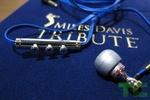
Miles Davis Trumpet High Performance Ear Phones
Monster markets the Trumpets as “musicians’ headphones.”
$269.00

Why Mahler?: How One Man and Ten Symphonies Changed Our World

Newest book from Norman Lebrecht
$11.99 for Nook or Kindle Editions

 Recordings

Choose from this selection of 2012 Grammy nominated albums!
Click on images or links to purchase.

CSO Resound - Chicago Symphony Orchestra Brass Live


Philharmonia Baroque Orchestra, Nicholas McGegan

Piano Concerto No. 2 In C Minor, Op. 18

Rhapsody On A Theme Of Paganini


Natalie Dessay with the Le Concert D`Astrée
 

For a complete list of all 2012 Classical Grammy Nominees, click here.

Tuesday, March 29, 2011

Students who feel "Entitled"

I just read a great commentary in the Chronicle of Higher Education by Elayne Clift called "From Students, a Misplaced Sense of Entitlement."  In this op ed piece she bemoans "The sad thing is, I'm not alone. Every college teacher I know is bemoaning the same kind of thing. Whether it's rude behavior, lack of intellectual rigor, or both, we are all struggling with the same frightening decline in student performance and academic standards at institutions of higher learning. A sense of entitlement now pervades the academy, excellence be damned."

I have to say I found this article very enlightening because as a violin teacher, I really never encounter this attitude from students.  I started wondering why I (and to the best of my knowledge, my colleagues) am not dealing with this issue as a teacher.  Could it be that there is something inherent in the training that musicians receive that nips this problem in the bud?  In fact, it has been my experience over the past 25 years, that students want us to raise expectations and be even more demanding.

Isn't it ironic that at a time when funding for the performing arts is being slashed that the values that mainstream professors find lacking in their students are so prevalent in the arts community?   Could it be that the performing arts has more to offer than just "entertainment?"  Could it be that the virtues of humility, compassion, discipline are the philosophical foundations of the arts?  Here is an interesting vignette....  A parent of one of my students once remarked that the only thing that came close to the rigors and demands of the training her daughter was receiving to become a top notch violinist, was the 4 years she herself spent as a midshipman at the Naval Academy in Annapolis in the 1980's. 

So maybe, if we want to stop raising a generation of wimpy, entitled brats, we should make every child learn to play an instrument at a proficient level.


Wednesday, March 16, 2011

El Sistema in the US

In a recent NPR interview, Richard Kessler (executive directory of New York City's Center for Arts Education) stated the following: 

"El Sistema as it is in Venezuela will never happen in the United States. It's not possible for the program to be embraced by the social service and child welfare agencies, and be connected to a national health care system that we don't have. Our government does not fund the arts on that kind of level, on that sort of basis. So what happens is El Sistema has to be translated into something that's American and I think in the translation, generally speaking, it doesn't look very different than many very good youth orchestra programs."


As a teacher who is primarily working with pre-college string students, I have been asking a question about "El Sistema" for several years and I have not received a satisfactory answer.  Can someone tell me if El Sistema is anything more than just the idea of taking at risk kids and giving them music instruction for free on a daily basis?  Is there a "method" to the teaching?  Are there materials, like in the Suzuki method?  Is there a philosophical foundation?  Is there a training system for teachers?

I have to agree with Richard Kessler.  As far as I can tell, "El Sistema", which as far as I can tell, means "give kids consistent, free music instruction",  has been alive and well for decades in the US, long before it was ever conceived of in Venezuela.  Just look to the D.C. Youth Orchestra program, which was founded in 1960, as a model.

                                                             D.C Youth Orchestra performing at the White House in the 1970's


It worked because the D.C. public schools worked in partnership with the founder, Lyn McLain, and provided a facility and financial support.  The major obstacle to providing comprehensive music instruction to millions of US children is a lack of cooperation and support from the American public school system.  We don't need to rely on "national health care systems."  We need facilities in which to provide instruction.  Such facilities already exist in the form of public schools which are paid for with taxpayer money.  Removing the cost of paying for use of a building goes a long way to eliminating much of the cost of providing "universal" music education.  Break the monopoly that public schools have on the buildings that should be seen as "community centers" and open up the buildings to after school educational programs, both in the "for-profit" and "non-profit" domains.  Remove the barriers to local private studio teachers having access to public facilities.  Let's go a step further and remove the monopoly "education majors" have on public school teaching jobs.  Open up the public schools to music performance majors and allow the buildings to be utilized by non-public school entities and you will go a long way towards providing a high quality, affordable music education to many more American children.  (see Orchkids Program too)

Anyway, I welcome responses regarding the questions I posed about the nature of "El Sistema."  I'm still wondering what it is.  Method, Philosphy, Idea?

Thursday, March 3, 2011

Tiger Mother

I just finished the book "Battle Hymn of a Tiger Mother" and wanted to recommend that parents read it.  Amy Chua spends much of the book discussing her relationship with her younger daughter and her violin lessons.  While her parenting style is definitely harsh by Western Standards, she does bring up an interesting philosophical question about happiness.  Should we be concerned about how "happy" a child is while practicing the violin or focus on future state of happiness that is attained through a successful outcome as the result of the practicing?

Tuesday, January 11, 2011

Detroit Strike, What are they thinking?

Ok, I was going to leave this alone, but I can't resist now that the DSO members have reached an even higher level of insanity.  An article in the Detroit News states that the musicians are handing out fliers at the North American International Auto Show requesting that Ford withdraw its support of the symphony.

In my previous blog, I tried to make some suggestions regarding possible solutions.  Biting the hand that feeds you, was not among the mix.  What possible good can it do to further injure the DSO financially?  Do the musicians want to have an orchestra to return to or are they just trying to accelerate its demise?  The orchestra still has ongoing expenses even when they are not having to make a payroll.  If the DSO gets to the point that it can't afford to keep the administration and staff, then the orchestra goes under.

I think a more useful tactic might have been to beg Ford to help broker a solution and to request that they increase their level of giving.  

Thursday, November 25, 2010

Detroit, think outside the box!


Ok, I have spent the last two blogs questioning the wisdom of musicians going on strike.  Now I would like to be a bit more productive and offer some possible solutions.  I agree that orchestras around the country are looking to see the outcome of the Detroit strike, but not for the reasons you might think.  I am going to take an optimistic view and assume that they are watching what happens to see if Detroit can come up with any brilliant ideas that will help them solve their economic woes too.

First, let's stop the ongoing "negotiations" over salary with all symphony orchestras in the country.  I have never been able to figure out why all non-profits in the country haven't done what US federal government workers have worked out with their employer.  In other words, just tie all raises (federal gov. workers never take pay cuts) to the same cost of living index that the federal government uses for their employees.  If federal government workers deserve a 2% raise, then so does everyone else in the non-profit sector.  Hey, it might even have a side benefit of making everyone in the country pay more attention to the expanding federal payroll.  In order to accommodate regional economic disparities, just use a comparison to public school teacher's salaries in any local jurisdiction.  If a public school teacher in Michigan makes 20% less than teachers in Maryland, then adjust symphony salaries accordingly.

Second, look at operating budgets based on percentages.  The American Symphony Orchestra League has detailed charts and graphs that show averages of how much is spent on administrative staff, operating costs, personnel, advertising/marketing, etc.  They do this for orchestras in every economic niche so that orchestras could compare apples to apples.  For example, an orchestra that operates on a $1.5 million can compare their percentages to other orchestras in the same tier.  If an orchestra is way out of line in comparison to other similar orchestras then figure out who is at fault and fire them.

Now, stop thinking in cash only terms.  Here are some examples.  All musicians need reliable cars to do their job.  We tend towards Toyota and Honda because of the longevity and reliability of the vehicles.  What if, instead of going to GM and Chrysler and asking for cash they don't have, the Detroit Symphony instead asked them for a car for every musician?  This is a win/win.  What a great advertising opportunity for car manufactures. (I would photograph the Detroit musicians parking lot and paste it in every classical music related publication possible.)  GM and Chrysler could promote their products into a market that has abandoned them and Detroit musicians could ditch a car payment.  ($200-500/month)

Repeat this concept for everything from dry cleaning to cell phones.  Give Detroit symphony musicians special discount cards for participating merchants.  Businesses may be cash poor right now, but they might be willing to give a 15% discount to musicians.  Again, a win/win on both sides.  Struggling businesses gain a new customer base, customer loyalty and help their community while musicians cut their expenses.


As a final added incentive, the citizens of Detroit (and all of Michigan) need to really consider what is lost if the symphony cannot retain these extraordinary musicians.  It is not just the economic contributions that a symphony makes to a region.  Remember, most of these musicians are also probably working as private studio teachers, helping another generation reap the many benefits of classical music training.  Most of them are also married, so not only do you lose the musician, you lose the spouse's job and economic contribution to the city.  Now add their children into the mix, as well as relatives who visit for holidays, etc. and you can see the economic impact in ever widening circles.

Why not give it a try?  Detroit has everything to gain by keeping this workforce in Detroit.  This is your last chance.  If the cultural institutions go under, then Detroit might as well resign itself to becoming a ghost town of America's industrial past.

Wednesday, November 24, 2010

Best Christmas Sheet Music for String Students

Parents and Teachers,
Performing holiday music for friends, relatives and in church services is a wonderful way to motivate your child to practice and help them build a sense of pride in their accomplishments. Playing holiday tunes is also a wonderful way for students to develop better reading skills.   Here are our suggestions for the best Christmas sheet music with links to purchase.


Suzuki Late book 1 students

Christmas and Chanukah Ensembles.  This collection of 23 holiday favorites will not only motivate beginning string students in the classroom, but will also encourage home chamber music sessions. The flexible format allows the book to be used with any combination of instruments, from a solo player with piano accompaniment to a full string ensemble. Correlated with specific pages in the Strictly Strings method.  $6.95

Christmas and Chanukah Ensembles for violin
Christmas and Chanukah Ensembles for viola
Christmas and Chanukah Ensembles for cello


Suzuki book 2/3 students

Christmas Kaleidoscope, vol. 1 by Robert Frost.  Orchestral Collection or  Ensemble. This collection is in friendly keys and is written in score form for 3 violins (or 3 celli or violas)  The score format can be a bit of a problem for new readers but the font size is large and usually children can easily adjust.  The great thing about this collection is that it can be played as a solo, duet, trio or with a single instrument and piano. (you must purchase the piano accomp. part)  The parts are interchangeable, so the cello parts can combine with violin or viola parts.  $3.95


Suzuki book 3 students

Christmas Kaleidoscope, vol. 2 by Robert Frost.  Orchestral Collection or  Ensemble.  See description for volume 1.  Keys become a bit more challenging for strings (flats) and more complex rhythms and meters.  $3.95


 My Very Best Christmas (17 Violin Solos, Duets and a Play-Along CD on Christmas favorites) Arranged by Karen Khanagov. Violin songbook and accompaniment CD for violin solo (or duet) and piano accompaniment. Beginning. 82 pages. Published by Mel Bay Publications Inc.  $15.96 includes piano part and CD acccomp.
My Very Best Christmas, violin (piano part and CD included)
My Very Best Christmas, viola (piano part and CD included)
My Very Best Christmas, cello (piano part and CD included)


Suzuki book 4 and up


Festive Strings for Ensemble arranged by Joanne Martin. Published by Alfred Music Publishing $6.95
Festive Strings is a collection of well-known Christmas and Chanukah melodies arranged to meet the needs of individuals, groups and orchestras. In order to provide flexibility, the collection is available in a number of instrumentations, all of which are compatible with each other. Accessible keys have been used and shifting is kept to a minimum. Titles are: Jingle Bells in D Major * Joy to the World * Chanukah * Away in a Manger * Jolly Old Saint Nicholas * God Rest Ye Merry, Gentlemen * S'Vivon * Jingle Bells in A Major * Lo, How a Rose * O Christmas Tree.
Festive Strings, piano accomp.


More Festive Strings is a collection of well-known Christmas and Chanukah melodies arranged to meet the needs of individuals, groups and orchestras. In order to provide flexibility, the collection is available in a number of instrumentations, all of which are compatible with each other. Accessible keys have been used and shifting is kept to a minimum. Titles are: O Chanukah * Angels We Have Heard on High * We Three Kings * Silent Night in D Major * We Wish You a Merry Christmas * O Come All Ye Faithful * Dreydl * Silent Night in G Major * Good King Wenceslas * What Child Is This (Greensleeves).